

A Practical Guide for Every User
Picking the right air compressor can seem tricky. There are many types and features to think about. But don’t worry – it’s not as hard as it looks.

To choose the best air compressor for your needs, focus on how you’ll use it and what tools you’ll power. Think about the air pressure (PSI) and airflow (CFM) your tasks require. This will help narrow down your options.
You’ll also want to consider things like size, noise level, and portability. A small portable unit might be perfect for home use, while a large stationary compressor could be better for a workshop or garage. By matching the compressor to your specific needs, you’ll get the best performance and value.
Key Takeaways
- Match the compressor’s PSI and CFM ratings to your tools and tasks
- Consider portability, noise level, and tank size for your work environment
- Look at different types like reciprocating, rotary screw, and scroll compressors to find the best fit
Understanding Air Compressor Specifications
Air compressor specs can be confusing, but they’re key to picking the right machine. Let’s break down the most important numbers you need to know.
Evaluating CFM and PSI
CFM (cubic feet per minute) and PSI (pounds per square inch) are crucial specs for air compressors. CFM measures how much air the compressor can deliver. PSI tells you the air pressure it can produce.
Most tools list their CFM needs. Add up the CFM for all tools you’ll use at once. Your compressor should deliver at least that much. A higher CFM rating means you can run more tools or larger ones.
PSI is also important. Many tools need 90 PSI to work well. Some need more. Check your tools’ PSI needs. Pick a compressor that can hit the highest PSI you need.
Remember, CFM and PSI are linked. As PSI goes up, CFM goes down. Look for specs that list CFM at the PSI you need.
Determining Tank Size and Air Volume
Tank size affects how long you can use air tools. Bigger tanks hold more air. This means less start-stop cycling for the motor.
For quick tasks, a small 1-5 gallon tank works. For longer jobs, you might need 30 gallons or more. Big tanks are great for high-CFM tools like sanders.
Air volume is key too. It’s how much air the tank can hold. More volume means more work time before the compressor kicks on again.
Think about your work style. Short bursts or long runs? This helps pick the right tank size. Portable compressors often have smaller tanks. Stationary ones can be much bigger.
Assessing Horsepower (HP) and Duty Cycle
Horsepower measures the compressor’s motor strength. More HP usually means more CFM. But it’s not the only factor.
A 1.5-6.5 HP range is common for many jobs. Larger compressors can go up to 15 HP. Don’t just focus on HP. Look at CFM and PSI too.
Duty cycle is how long a compressor can run in an hour. It’s shown as a percentage. A 50% duty cycle means 30 minutes on, 30 off.
For constant use, look for a 100% duty cycle. For occasional use, lower is okay. Match the duty cycle to your work needs.
Consider energy use too. Higher HP motors use more power. Balance power needs with energy costs for your situation.
Types of Air Compressors Explained
Air compressors come in various types, each with unique features and benefits. These machines use different methods to compress air for powering tools and equipment.
Piston vs. Portable Compressors
Piston compressors, also called reciprocating compressors, are common in workshops and garages. They use pistons to compress air in one or two stages.
Single-stage piston compressors are good for smaller jobs. They compress air once before storing it in a tank.
Two-stage compressors are more powerful. They compress air twice for higher pressure. These are better for heavy-duty tasks.
Portable compressors are lightweight and easy to move. They’re great for job sites or home use. Most portable units are piston-type, but some use other technologies.
Electric air compressors are common for indoor use. They’re quieter and don’t produce fumes.
Gasoline engine compressors work well outdoors where electricity isn’t available.
Understanding Rotary Screw and Centrifugal Compressors
Rotary screw compressors use two interlocking screws to compress air. They provide a steady air flow and work well for continuous use.
These compressors are often used in factories and large workshops. They can run for long periods without overheating.
Centrifugal compressors use a spinning impeller to compress air. They’re best for very high volumes of air at lower pressures.
These machines are common in large industrial settings. They’re efficient for powering many tools at once.
Both rotary screw and centrifugal compressors are usually stationary. They’re too large and heavy to move easily.
Oil-Free vs. Oil-Lubricated Compressors
Oil-lubricated compressors use oil to cool and lubricate internal parts. They tend to last longer and run quieter than oil-free models.
These compressors work well for most general purposes. But they can leave trace amounts of oil in the compressed air.
Oil-free compressors don’t use oil for lubrication. They’re better for tasks that need clean air, like painting or food processing.
Scroll compressors are a type of oil-free compressor. They use two spiral-shaped scrolls to compress air.
Oil-free units often cost more upfront but need less maintenance. They’re a good choice for light-duty or occasional use.
Choosing the Right Compressor for Tools and Projects
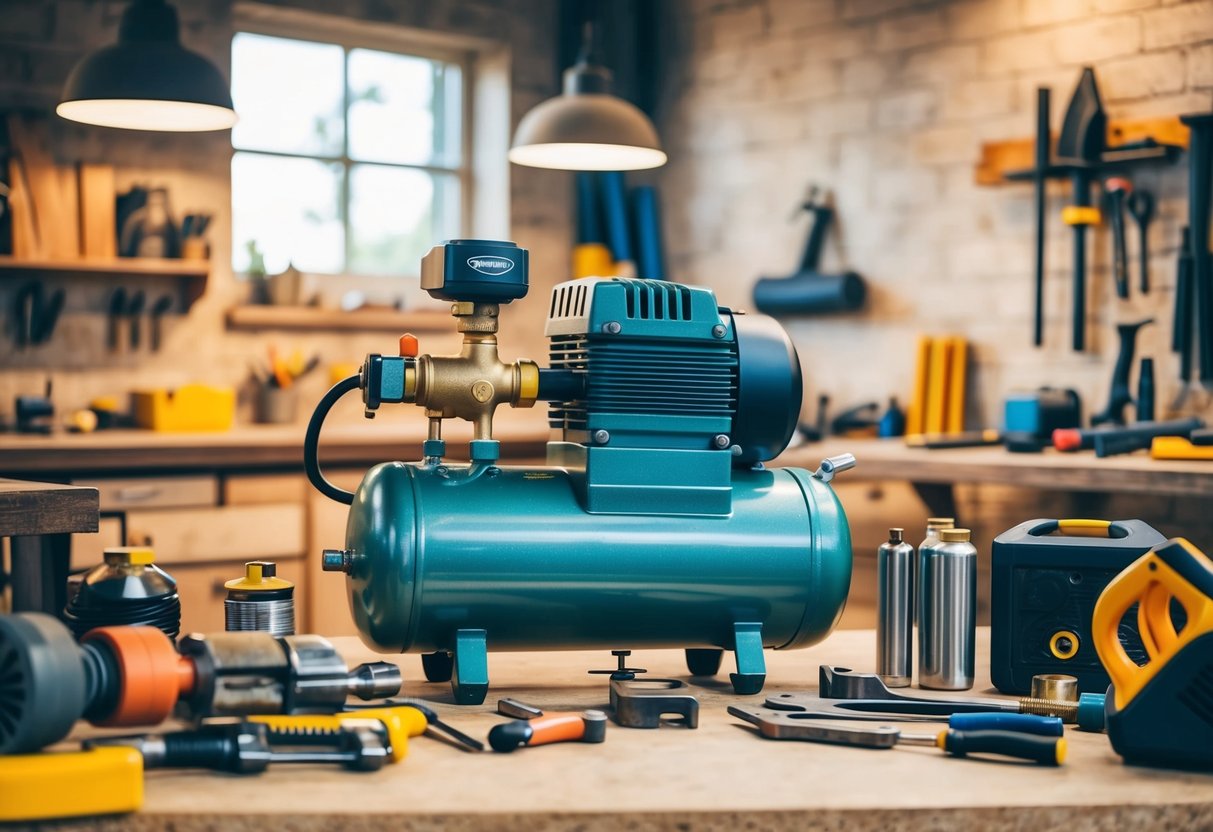
Picking the right air compressor for your tools and projects is key. You need to match the compressor to your specific needs for the best results.
Compatibility with Pneumatic Tools
Different pneumatic tools need different amounts of air pressure and flow. Check the PSI and CFM requirements of your tools. Most air tools need 90-120 PSI. Nail guns and staplers need less air than sanders or impact wrenches.
Here’s a quick guide:
- Nail guns: 2-3 CFM
- Sanders: 6-9 CFM
- Impact wrenches: 3-8 CFM
Make sure your compressor can meet these needs. A bigger tank helps run tools longer. For multiple tools, add up the CFM needs and get a compressor that can handle the total.
Compressors for Painting and Sanding
Painting and sanding tasks need steady airflow. For these jobs, look at the compressor’s duty cycle. This tells you how long it can run before needing a break.
Portable air compressors work well for small paint jobs. But for big projects, you’ll want a larger, stationary unit. It should have at least a 20-gallon tank.
For spray painting, you need:
- 10-15 CFM at 90 PSI for most jobs
- Oil-free compressor to avoid contaminating the paint
- Moisture separator to keep water out of the paint
High-Pressure Application Considerations
Some jobs need more pressure. Tire inflation and pressure washing often require over 100 PSI. For these tasks, look at two-stage compressors. They can reach higher pressures than single-stage units.
High-pressure applications also need more power. Check the horsepower (HP) rating. More HP means the compressor can handle tougher jobs.
Keep in mind:
- Pressure washers need 4-8 CFM at 100+ PSI
- Tire inflation needs less flow but high pressure
- Always use the right hose and fittings for high pressure
Choose a compressor with a bit more capacity than you need. This gives you room to grow and helps your tools work better.
Operational Factors and Maintenance
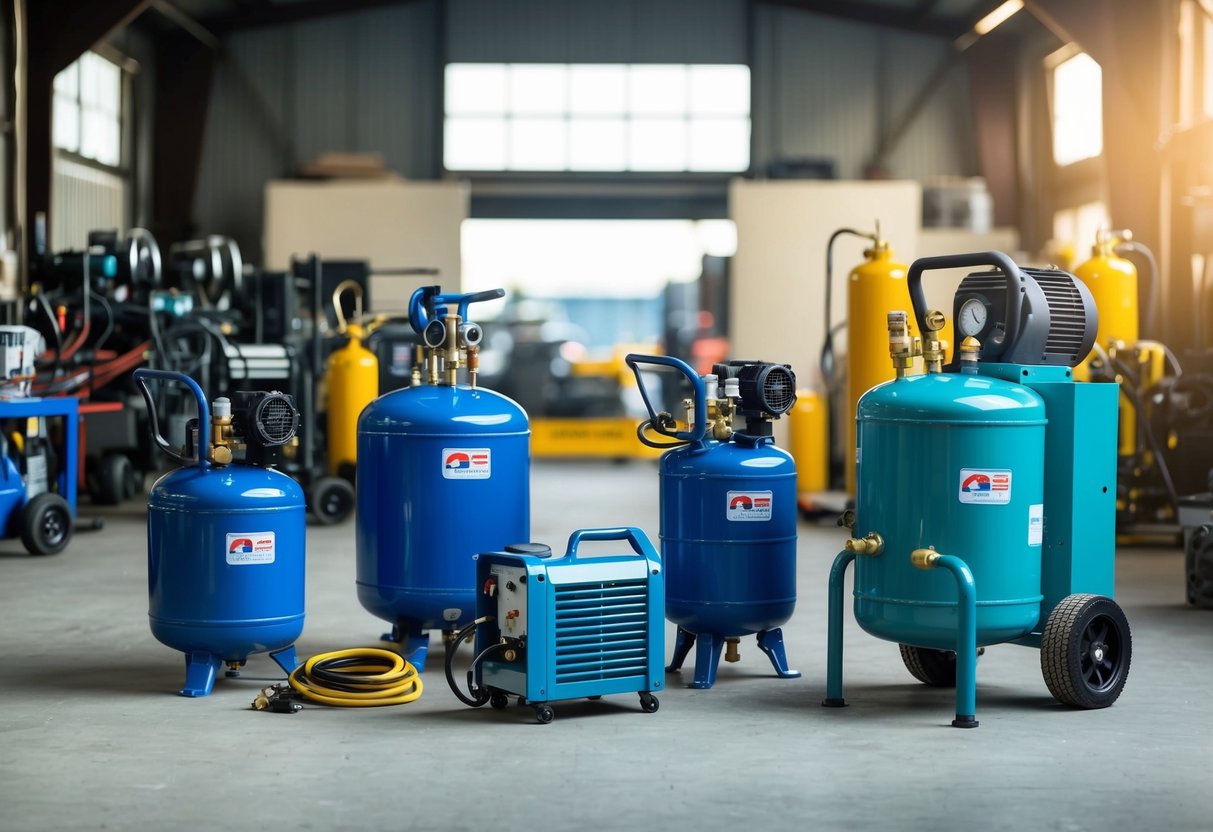
When choosing an air compressor, it’s crucial to consider how it will operate day-to-day and what upkeep is needed. This impacts both performance and long-term costs.
Energy Efficiency and Electric Motors
Air compressors use a lot of power, so energy efficiency is key. Look for models with high-efficiency electric motors. These motors use less electricity and can save you money over time.
Most air compressors use electric motors measured in horsepower (hp). Higher hp usually means more power and air output. But it also means higher energy use.
For many tasks, a 5-10 hp motor is enough. Larger jobs may need 15 hp or more. Match the motor size to your needs to avoid wasting energy.
Variable speed drives can boost efficiency. They adjust motor speed based on demand. This cuts energy use during low-demand periods.
Noise Levels and Workspace Environment
Air compressors can be loud. This matters if you work in a small shop or near others. Noise levels vary widely between models.
Reciprocating compressors tend to be louder. Scroll compressors are often quieter. Some models have noise-reducing features like insulated casings.
Consider where you’ll use the compressor. In a large warehouse, noise may not be an issue. In a small garage, a quieter model is better.
Proper mounting can reduce vibration and noise. Use rubber pads or special mounts to dampen sound. Placing the compressor away from walls also helps.
Air Dryers and Filters for Quality Air Supply
Clean, dry air is vital for many tools and processes. Moisture and contaminants can damage equipment and affect work quality.
Air dryers remove moisture from compressed air. This prevents rust and extends tool life. There are several types:
- Refrigerated dryers cool the air to remove moisture
- Desiccant dryers use special materials to absorb water
- Membrane dryers use selective membranes to separate water vapor
Filters remove particles, oil, and other contaminants. Different filter grades suit various needs. Use finer filters for tasks needing very clean air, like painting.
Regular filter changes keep your air clean and your system running smoothly. Check and replace filters as recommended by the manufacturer.
Assessing Brand Reliability and Manufacturer Support
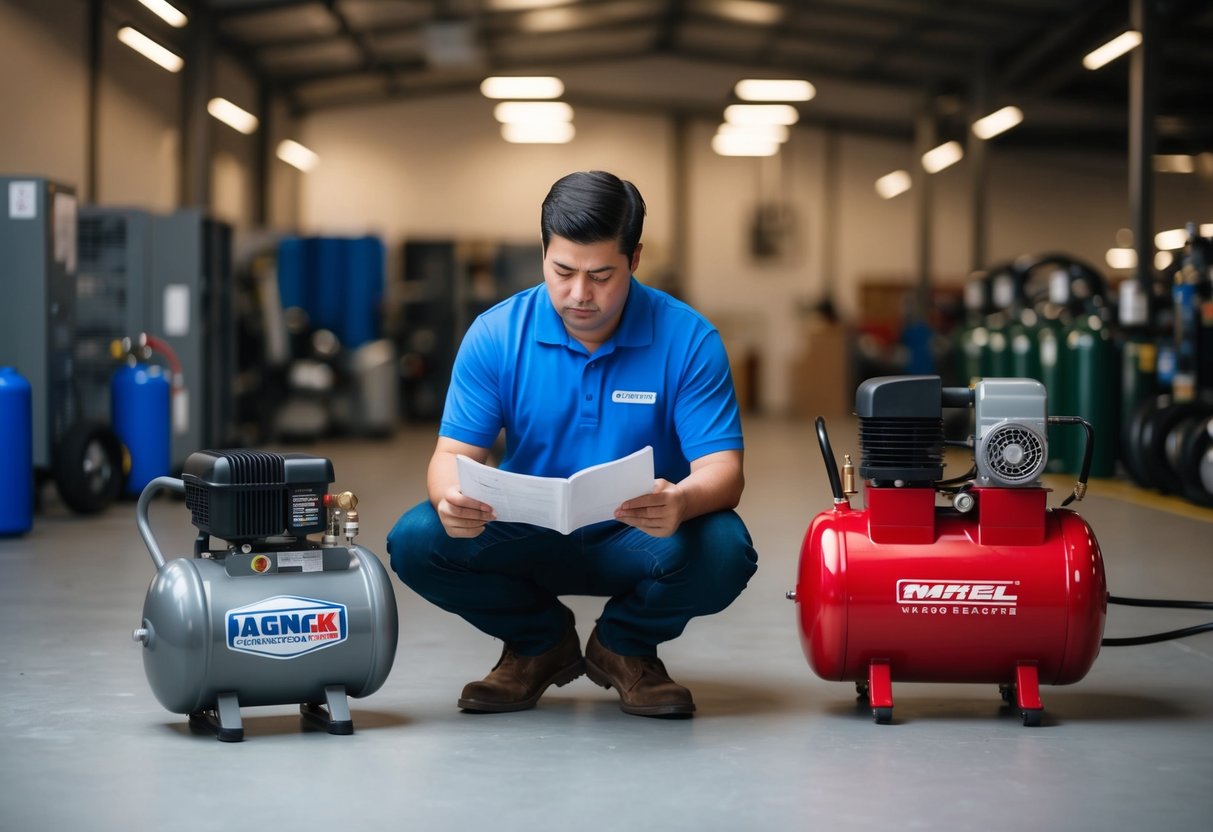
When picking an air compressor, brand reliability and support are key. Top manufacturers offer quality industrial air compressors with good warranties and service.
Look for brands with a strong reputation in the industry. Check online reviews and ask other users about their experiences. Reliable brands often have a history of making durable products.
Consider the warranty and after-sales support. A longer warranty period can indicate the manufacturer’s confidence in their product. Good support includes:
• Quick response times • Available spare parts • Knowledgeable technicians
For industrial air compressor needs, choose a brand that offers on-site servicing. This can reduce downtime if issues arise.
Reciprocating compressors and other types may need different levels of support. Make sure the brand you pick can handle your specific compressor type.
Remember, the best air compressors come with strong support from manufacturers. This is especially important for larger or stationary models.
Portable vs. Stationary Air Compressors
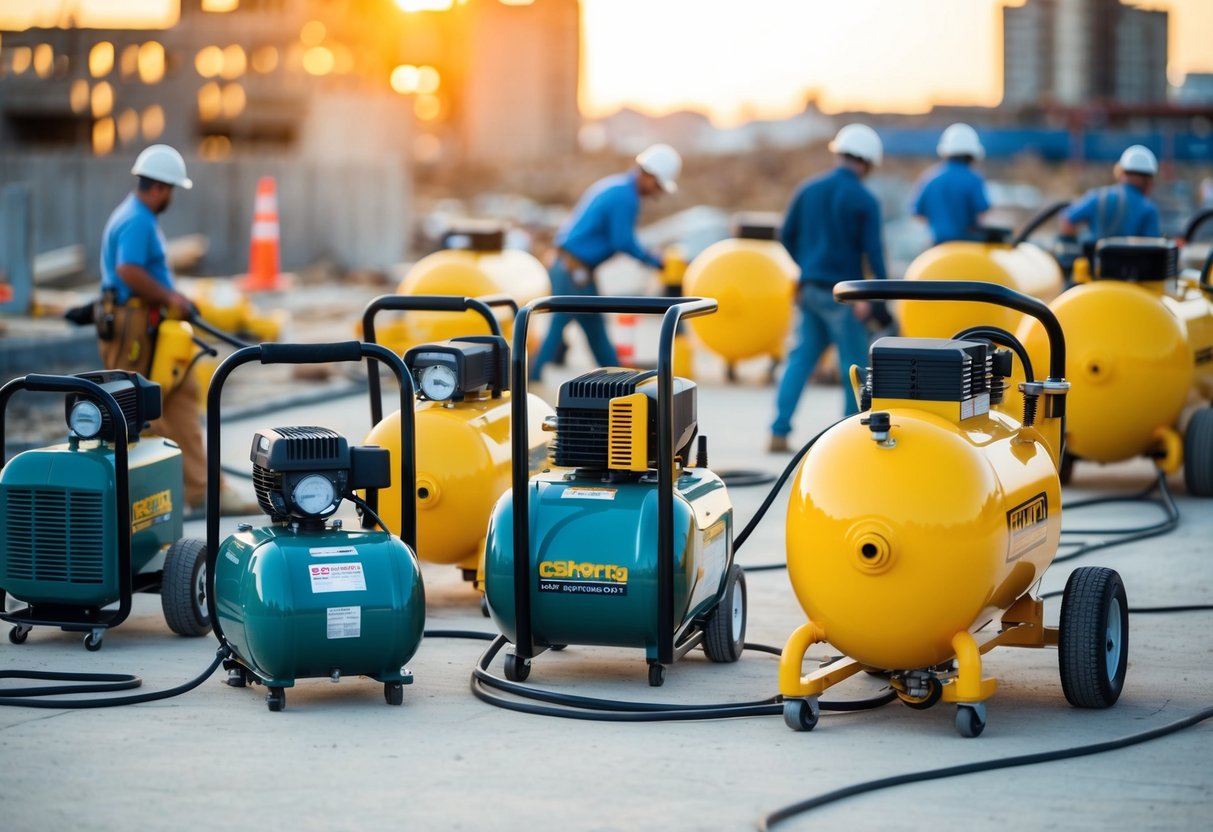
When choosing an air compressor, you’ll need to decide between portable and stationary models. Each type has its own benefits and drawbacks depending on your work needs and space constraints.
Mobility and Space Considerations
Portable air compressors offer great flexibility. You can easily move them from job to job or around your workspace. This makes them ideal for contractors, DIY enthusiasts, or anyone who needs to use their compressor in different locations.
Portable models come in various sizes. Some are small enough to carry by hand, while others have wheels for easy transport. They’re perfect for tasks that require mobility, like inflating tires or using nail guns on construction sites.
Stationary compressors are larger and more powerful. They’re designed to stay in one place, usually in a workshop or garage. These units are best for tasks that need constant air supply, like running a paint booth or powering multiple tools at once.
Tank Capacity and Job Site Efficiency
Tank capacity plays a big role in job site efficiency. Portable compressors often have smaller tanks, ranging from 1 to 20 gallons. This means they may need to run more often to keep up with air demand.
Stationary compressors typically have larger tanks, sometimes over 60 gallons. This allows for longer run times and less frequent cycling. It’s ideal for jobs that require constant air flow or high volume use.
For DIY projects or light-duty work, a single-stage air compressor with a smaller tank might suffice. But for heavy-duty industrial use, you’ll likely need a stationary model with a larger tank and higher output.
Remember to check the compressor’s CFM (cubic feet per minute) rating. This tells you how much air the unit can deliver. Match this to your tools’ requirements for best performance.
Advanced Features and Upgrades
Air compressors come with various features to boost performance and ease of use. Here are some key upgrades to look for:
• Variable speed control: Adjusts motor speed to match air demand, saving energy • Auto-drain valves: Remove moisture automatically to prevent tank corrosion • Air filters: Trap contaminants to protect tools and improve air quality • Thermal overload protection: Shuts off the motor if it overheats
Electric air compressors often have lower noise levels than gas-powered models. Look for units with noise-reducing enclosures if sound is a concern.
Pay attention to PSI ratings and air flow (CFM) when comparing models. Higher PSI allows for more air storage, while CFM indicates how quickly the compressor can deliver air.
Some advanced compressors offer:
• Digital controls for precise pressure settings • Remote monitoring via smartphone apps • Multiple air outlets to run several tools at once • Quick-connect couplings for easy hose changes
Consider an oil-free compressor if you need clean air for painting or other sensitive tasks. These require less maintenance but may be louder than oil-lubricated models.
For maximum portability, look for compressors with large wheels and ergonomic handles. Pancake and hotdog style tanks are compact options for lighter-duty home use.
Frequently Asked Questions
Choosing the right air compressor involves considering specific factors like power needs, capacity requirements, and intended applications. These common questions address key aspects of air compressor selection.
What factors should I consider when selecting an air compressor for power tools?
When picking an air compressor for power tools, focus on the CFM and PSI ratings. These ratings must match or exceed your tools’ requirements.
Check the highest CFM and PSI needs among your tools. Choose a compressor that can handle these demands.
Tank size matters too. A larger tank lets you use air tools for longer without the motor kicking in.
How do I determine the necessary capacity and pressure for an air compressor in a residential setting?
For home use, think about your planned tasks. Light-duty jobs like inflating tires need less capacity than running air tools.
A good starting point is a compressor with 2-3 CFM at 90 PSI. This works for most household tasks.
Consider future needs too. It’s better to have slightly more capacity than you think you’ll need.
Which specifications are important when choosing an air compressor for pneumatic nailers?
For nail guns, pay attention to the air consumption rate. This is usually measured in CFM.
Most pneumatic nailers need 0.5 to 2.5 CFM at 90 PSI. Check your nailer’s manual for exact requirements.
Tank size affects how long you can work before the compressor needs to refill. A 6-gallon tank often works well for nailers.
What guidelines can assist me in understanding the size of air compressor required for inflating car tires?
For tire inflation, a small portable compressor often suffices. Look for units with at least 1 CFM at 90 PSI.
Higher PSI ratings let you inflate tires faster. A max PSI of 150 or more is good for car tires.
Consider a 12V compressor that plugs into your car’s power outlet for on-the-go use.
How can I find the appropriate CFM and PSI ratings for an air compressor to use with an impact wrench?
Impact wrenches typically need more air than other pneumatic tools. Check your wrench’s specifications for exact needs.
Most impact wrenches require 3-8 CFM at 90 PSI. Choose a compressor that exceeds these requirements.
A larger tank helps maintain consistent airflow for impact wrenches. Consider at least a 20-gallon tank.
What resources can help me calculate the air compressor size I need for my specific applications?
Many tool manufacturers offer air requirement charts on their websites. These show CFM and PSI needs for different tools.
Online air compressor calculators can help. Input your tools and usage to get size recommendations.
Local tool suppliers often have experts who can guide you based on your specific needs.
Pros and Cons
Different types of air compressors have their own strengths and weaknesses. Let’s look at some key points for each type.
Reciprocating Compressors Pros: • Good for small to medium jobs • Relatively affordable • Many portable options available
Cons: • Can be noisy • Not ideal for continuous use • May require more maintenance
Rotary Screw Compressors Pros: • Suitable for continuous operation • More energy-efficient than reciprocating types • Quieter operation
Cons: • Higher initial cost • May be overkill for small jobs • Less portable than reciprocating models
Centrifugal Compressors Pros: • Best for very high-volume needs • Highly efficient at full capacity • Low maintenance requirements
Cons: • Expensive upfront cost • Not suitable for small or medium jobs • Limited flexibility in output
Remember to consider your specific needs when weighing these pros and cons. The right choice depends on your tasks, budget, and work environment.


