


Pneumatic Power for Chiseling, Shaping, and More – Versatile Tools for Industrial and Construction Applications
Air hammers pack a powerful punch for tough jobs. These handy pneumatic tools use compressed air to deliver rapid, forceful blows perfect for chiseling, shaping metal, and breaking up concrete. Air hammers give you the strength and speed to tackle projects that would be difficult or impossible with hand tools alone.
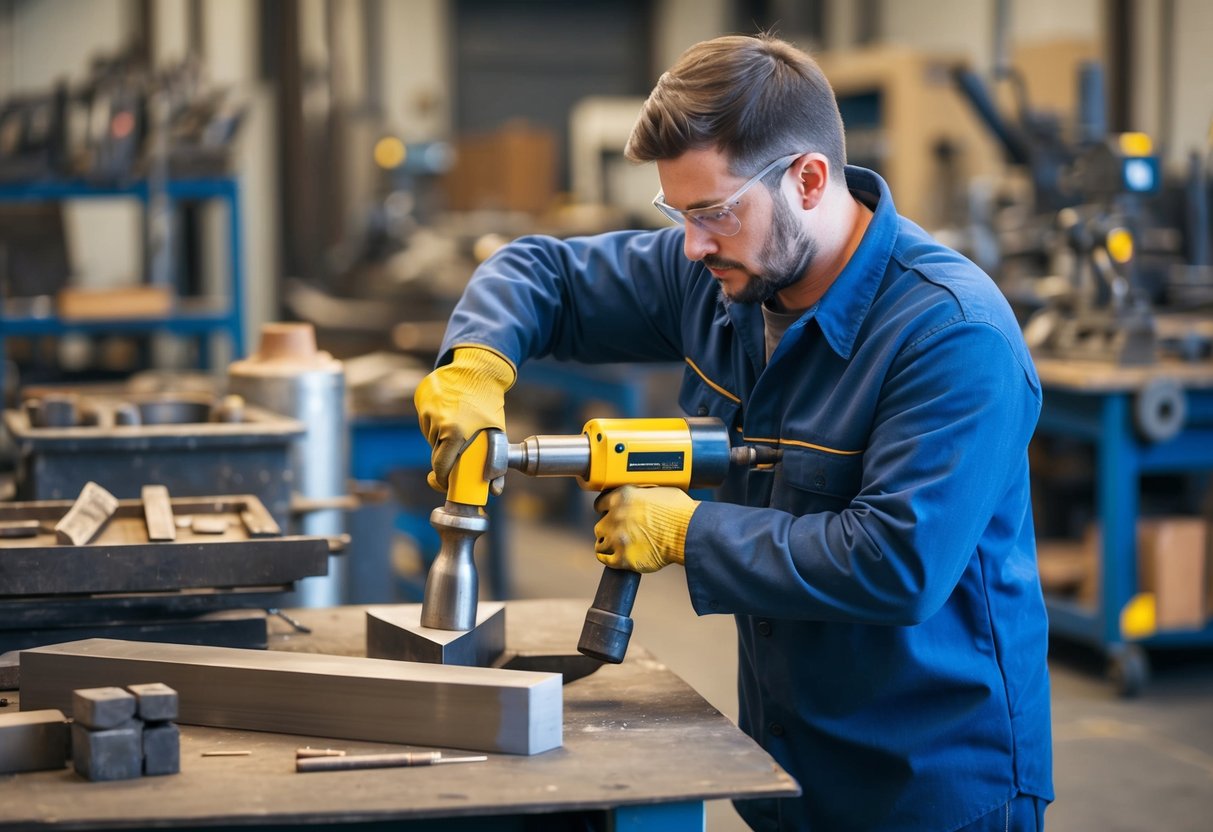
You’ll find air hammers useful for all kinds of tasks. In auto shops, they quickly remove stubborn bolts and separate rusted parts. Construction crews rely on them to break up old tile and concrete. Metalworkers shape and cut sheet metal with ease. The fast, repetitive impacts make quick work of jobs that would take ages by hand.
When shopping for an air hammer, look for one that fits your needs. Compact models work well in tight spaces, while heavier-duty versions pack more power. Consider factors like stroke length, blows per minute, and air consumption. The right air hammer will boost your productivity and expand what you can accomplish.
Key Takeaways
- Air hammers use compressed air to deliver rapid, powerful blows for various tasks
- They excel at chiseling, shaping metal, and breaking up hard materials
- Choosing the right air hammer depends on your specific job requirements and workspace
Understanding Air Hammers
Air hammers use compressed air to deliver powerful blows for chiseling, shaping, and breaking materials. They offer speed and precision for various tasks in construction, automotive work, and manufacturing.
Basics of Air Hammer Operation
Air hammers work by using compressed air to drive a piston back and forth rapidly. This creates a hammering action that can be used for many tasks. The main parts are:
- Air compressor
- Pneumatic cylinder
- Piston
- Valve
- Chuck
- Bit or chisel
When you squeeze the trigger, compressed air pushes the piston forward. This strikes the chisel, creating the hammering effect. Air hammers can deliver up to 3,000 blows per minute, making them very efficient.
The power of an air hammer is measured by its stroke length and air consumption. Longer strokes and higher air flow mean more force with each blow.
Types of Air Hammers
Air hammers come in different sizes for various jobs:
- Light-duty: For small chiseling tasks
- Medium-duty: Good for auto body work
- Heavy-duty: Best for breaking concrete or heavy material removal
Some popular brands include:
- Ingersoll Rand
- Chicago Pneumatic
- Craftsman
Each type has pros and cons. Light-duty hammers are more precise but less powerful. Heavy-duty models pack more punch but can be harder to control.
Choosing the Right Air Hammer
To pick the best air hammer for your needs, think about:
- The tasks you’ll use it for
- How often you’ll use it
- Your air compressor‘s output
For occasional light work, a general-duty hammer might be enough. If you’re doing lots of heavy-duty jobs, look for one with higher air consumption and a longer stroke.
Check the blows per minute (BPM) rating. Higher BPM means faster work, but may sacrifice some control.
Consider the chuck type too. Quick-change chucks make it easy to swap bits, while more secure chucks are better for heavy-duty work.
Air Hammer Applications
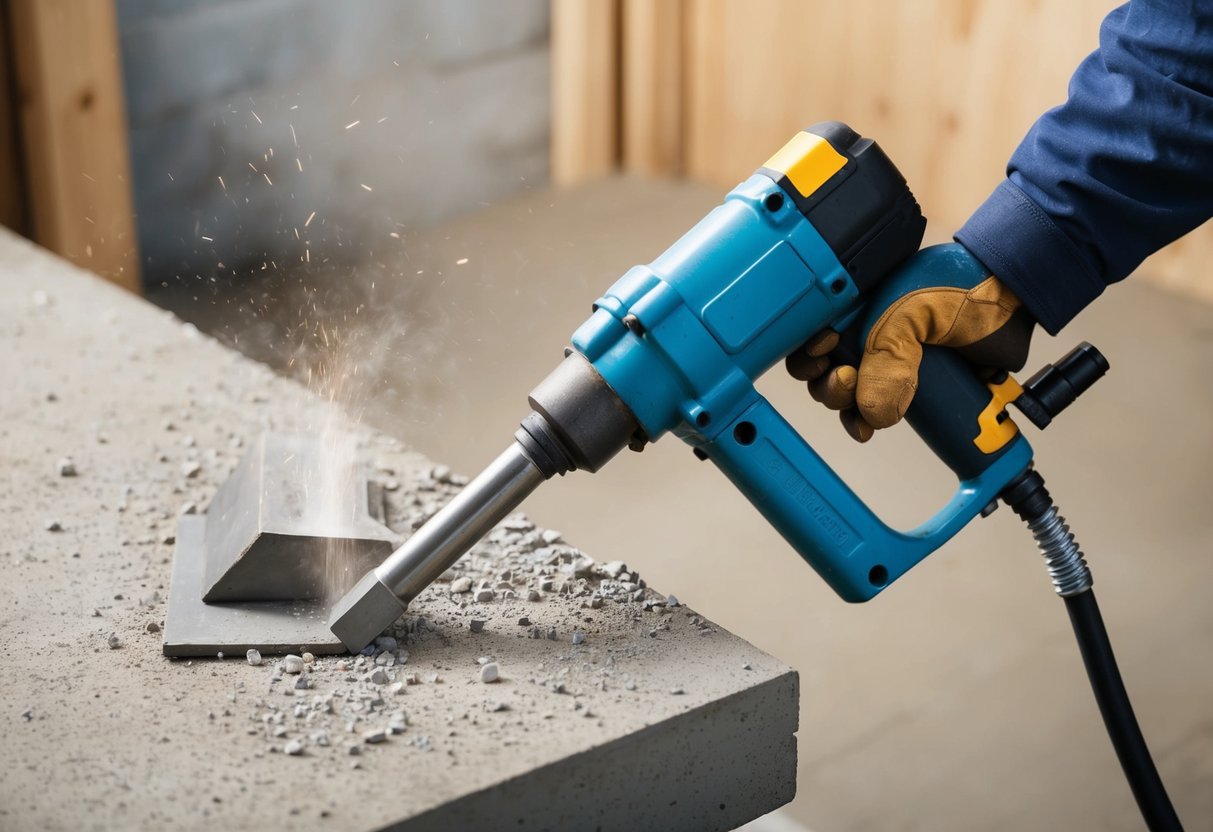
Air hammers are versatile tools used in many industries. They excel at tasks requiring repetitive impact force.
Demolition Work
Air hammers shine in demolition jobs. You can use them to break up concrete, tile, and other hard materials. Chipping hammers are great for removing old mortar or concrete.
For tougher jobs, heavy-duty air hammers pack more power. These tools can demolish walls, floors, and foundations quickly.
Air hammers also work well for smaller demolition tasks. You can use them to remove stubborn nails or screws. They’re handy for prying apart wooden structures too.
Metal Fabrication Tasks
In metalworking, air hammers are invaluable. You can use them to shape, cut, and join metal pieces.
For sheet metal work, air hammers help with:
• Cutting • Bending • Smoothing edges • Creating decorative textures
Riveting hammers are perfect for joining metal parts. They work on steel, aluminum, and other metals.
Air hammers also excel at punching holes in metal. With the right attachments, you can create precise openings quickly.
Automotive and Assembly Jobs
Auto mechanics rely on air hammers for many tasks. These tools can loosen rusted bolts and separate stuck parts.
You can use air hammers to:
• Remove exhaust systems • Separate ball joints • Cut through body panels • Smooth out dents
In assembly work, air hammers speed up production. They’re great for driving pins, setting bearings, and installing bushings.
Rivet busting hammers are essential for heavy vehicle repair. They make quick work of large rivets on trucks and machinery.
Technical Specifications
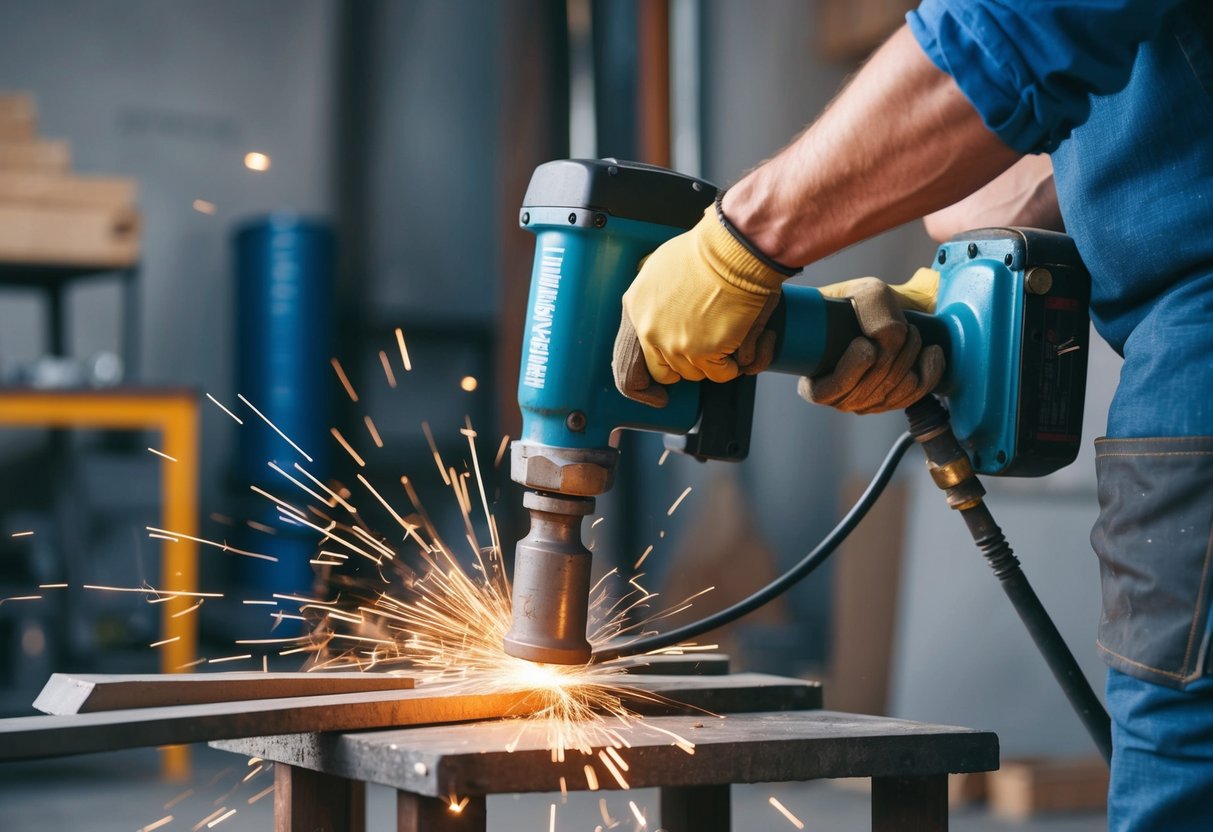
Air hammers are powerful tools that rely on compressed air to deliver high-speed impacts. Their design and power requirements determine their performance and suitability for various tasks.
Air Hammer Construction
Air hammers have a durable build to handle tough jobs. They use heat-treated steel for key parts like the cylinder and piston. This makes them strong and long-lasting. The body is often made of metal or tough plastic.
Inside, you’ll find a piston that moves back and forth very fast. This creates the hammering action. The chuck holds different bits for various tasks. Some models let you adjust the impact force.
Most air hammers weigh between 3 and 7 pounds. This makes them easy to handle for long periods. The size can vary, but many are about 7-8 inches long.
Power Source and Requirements
Air hammers need compressed air to work. You must connect them to an air compressor. The air pressure is key for power and speed.
These tools usually need 90-100 PSI of air pressure. Some heavy-duty models may need more. The air flow rate is also important. Most air hammers use 3-4 cubic feet per minute (CFM) of air.
High BPM (blows per minute) is a key feature. Many air hammers can deliver 2,000-3,000 BPM. This high speed makes them great for breaking and chiseling.
You need the right hose and fittings to connect your air hammer. Make sure your compressor can meet the tool’s air needs for best results.
Air Hammer Accessories
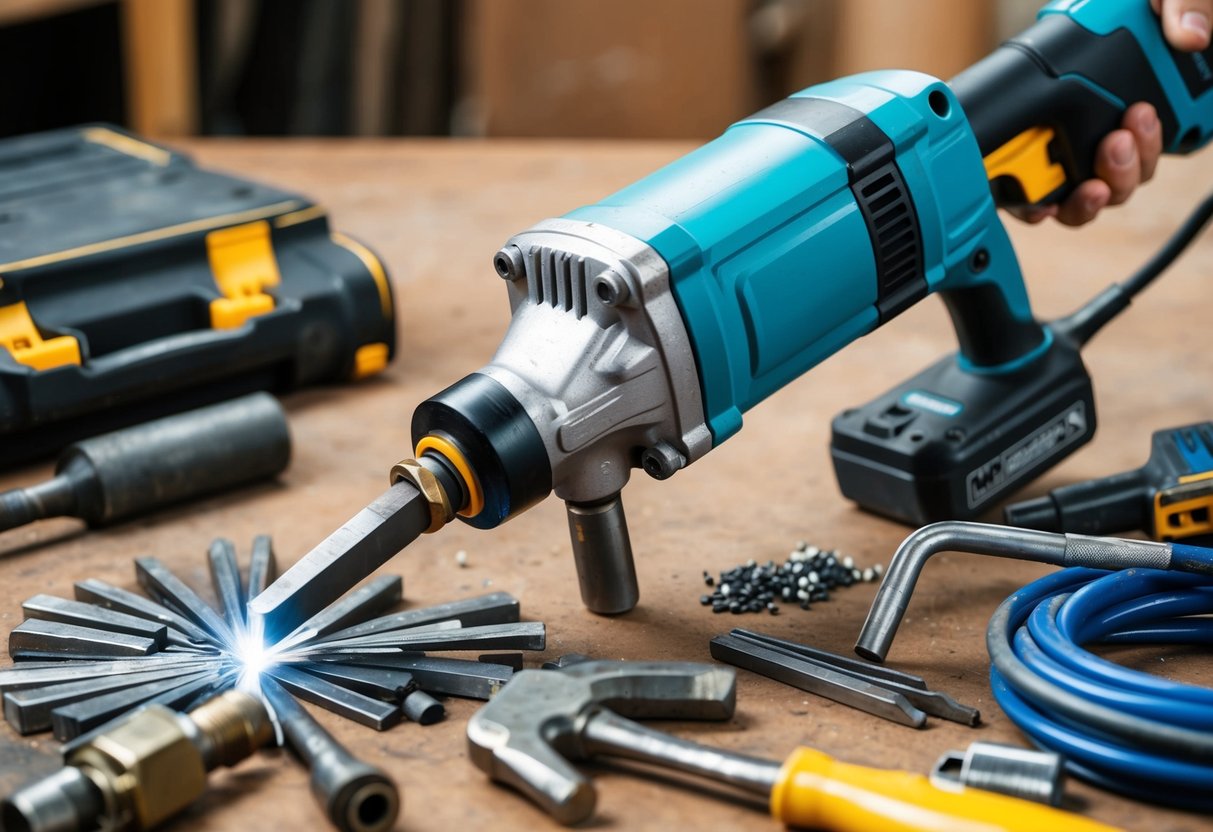
Air hammers work best with the right accessories. These tools help you get more done and keep your air hammer running smoothly.
Attachments and Chisel Sets
Air hammer kits often come with chisel sets. These sets have different tips for various jobs. You might get a flat chisel for cutting metal, a tapered punch for making holes, and a panel cutter for auto body work.
The Ingersoll Rand 114GQC Air Hammer is popular and comes with a 3-piece chisel set. This set lets you start working right away.
Some common attachments include:
- Flat chisels
- Tapered punches
- Panel cutters
- Bushing tools
- Rivet busters
Pick attachments that fit your air hammer’s shank size. Most use a 0.401-inch shank, but some need larger sizes.
Maintenance Tools for Air Hammers
Keeping your air hammer in good shape is key. You’ll need some basic tools and supplies.
Here’s what you should have:
- Air tool oil
- Cleaning cloths
- Replacement O-rings
- Wrench set
Air-powered hammers need regular oiling. Put a few drops of air tool oil in the air inlet before each use. This keeps the tool running smoothly.
Clean your air hammer after each use. Wipe it down with a cloth to remove dirt and debris. Check the O-rings often and replace them if they look worn.
A wrench set helps you take apart the air hammer for deep cleaning. Do this every few months or if the tool starts acting up.
Safety and Maintenance
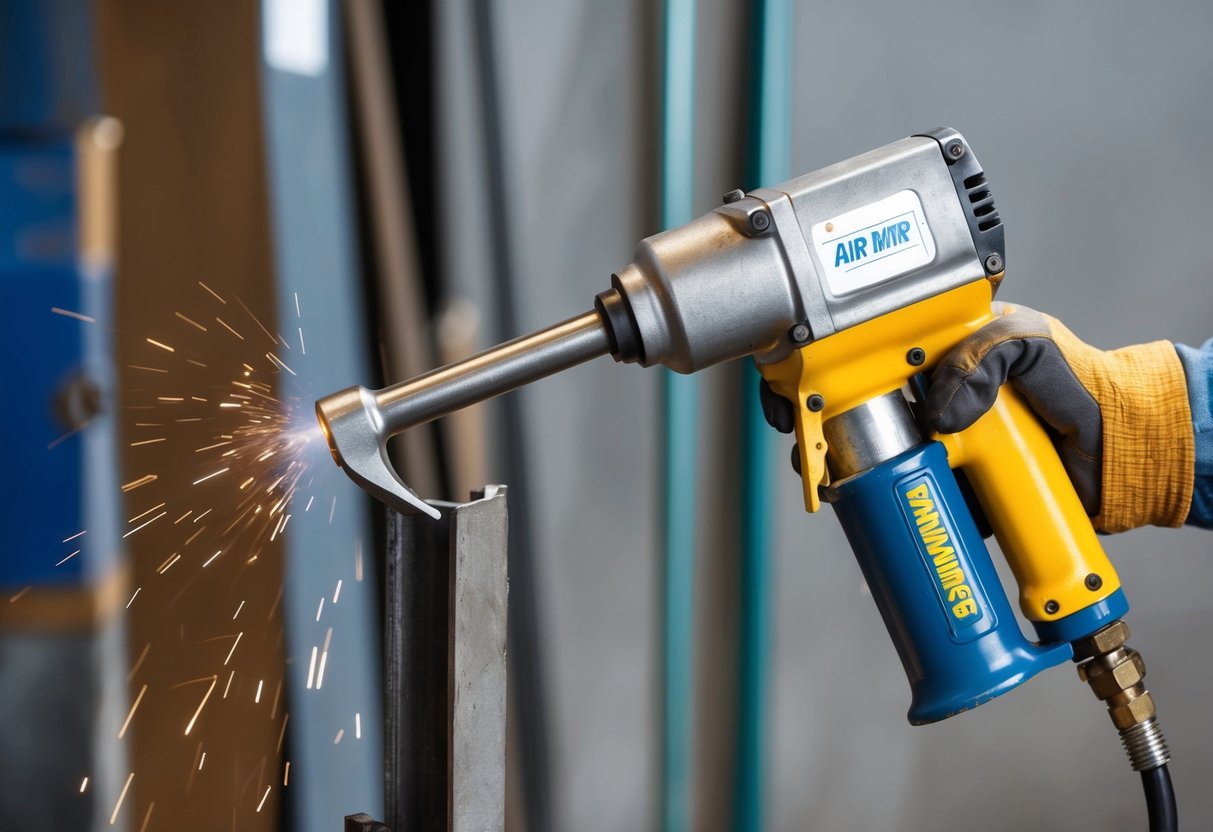
When using air hammers, safety should be your top priority. Always wear safety glasses, hearing protection, and work gloves. Compressed air can be dangerous, so inspect hoses regularly for wear or damage.
Keep your work area clean and well-lit. Secure your workpiece properly to prevent it from shifting during use. Never point the air hammer at yourself or others.
Maintain your air-powered hammer regularly for optimal performance and longevity. Clean the tool after each use with a dry cloth. Lubricate moving parts as recommended by the manufacturer.
Store your air hammer in a dry place to prevent rust. Disconnect it from the air supply when not in use. Check the air pressure before each use to ensure it matches the tool’s requirements.
Replace worn or damaged parts promptly. This includes chisels, bits, and seals. Using damaged parts can be unsafe and reduce tool efficiency.
Be mindful of your posture when using an air hammer. Take breaks to avoid fatigue and repetitive strain injuries. If you feel discomfort, stop working and reassess your technique.
Frequently Asked Questions
Air hammers are versatile tools with many applications. They come in different power levels and can be used with various attachments. Proper selection and operation are key for best results.
What factors determine the power of an air hammer?
The power of an air hammer depends on its air consumption. This is measured in cubic feet per minute (CFM). Higher CFM ratings mean more power. Powerful air hammers use 3-4 CFM or more.
Air pressure also affects power. Most air hammers work best at 90-100 PSI. Check the tool’s specs for the right pressure range.
How do I select the right air hammer for heavy-duty applications?
For heavy-duty work, look for air hammers with high CFM ratings. Choose models with 3-4 CFM or higher air consumption.
Check the impact force, measured in blows per minute (BPM). Higher BPM means faster work. For tough jobs, pick hammers with 2000+ BPM.
What pressure settings are recommended for effective air hammer operation?
Most air hammers work best at 90-100 PSI. This gives a good balance of power and control.
You can adjust the pressure for different tasks. Lower it for delicate work. Raise it for more force on tough materials.
For what purposes can pneumatic air hammers typically be used?
Air hammers are great for many jobs. You can use them for:
- Cutting metal
- Shaping stone
- Breaking up concrete
- Removing rust
- Separating parts in auto repair
They excel at chiseling, cutting, and shaping various materials.
What are the must-have air hammer attachments for a comprehensive toolset?
A good air hammer kit should include:
- Chisels of different widths
- A punch tool
- A scraper attachment
- A panel cutter
- A bushing tool
These cover most common tasks. Add specialized bits for your specific needs.
How do air hammer bits vary and what should I consider when choosing them?
Air hammer bits come in many shapes and sizes. Flat chisels are great for general work. Pointed chisels help with precision.
Consider the material you’re working on. Softer bits work well on metal. Harder bits are better for stone or concrete.
Bit length matters too. Longer bits give more reach. Shorter ones offer better control.


