


To Boost Your Productivity: Essential Tools for Efficient Woodworking
Circular saw accessories and attachments can transform your woodworking experience. These add-ons enhance precision, efficiency, and versatility, allowing you to tackle a wider range of projects with ease. Circular saw accessories can save you approximately 30% of time per task and increase productivity for 85% of users.

From guide rails for perfectly straight cuts to dust collection attachments for a cleaner workspace, there’s an accessory for every need. Laser guides and LED lights improve visibility and accuracy, especially in low-light conditions. Specialized blades for different materials expand your saw’s capabilities, letting you cut through metal, masonry, or hardwood with confidence.
Don’t overlook the importance of clamps and stabilizers. These accessories secure your workpiece and provide stability during cuts, improving safety and precision. By investing in the right accessories, you’ll boost your productivity and achieve professional-quality results in your projects.
Key Takeaways
- Circular saw accessories can significantly improve task efficiency and overall productivity
- Guide rails, dust collectors, and laser guides enhance precision and cleanliness in your work
- Specialized blades and stabilizing accessories expand your saw’s capabilities and ensure safer operation
Essential Circular Saw Accessories
Guide rails and dust collection attachments are crucial accessories for enhancing your circular saw’s performance. These tools improve accuracy, safety, and cleanliness in your woodworking and construction projects.
Guide Rails and Fences
Guide rails for circular saws significantly improve cutting precision and efficiency. They ensure straight, accurate cuts by providing a stable track for your saw to follow. You can achieve professional-quality results, even on long cuts.
Guide rails come in various lengths and can often be connected for extended cuts. They typically feature non-slip bases and splinter guards to prevent tearout. Some models are compatible with multiple saw brands, while others are designed for specific manufacturers.
When selecting a guide rail, consider factors like:
- Compatibility with your saw model
- Length and extendability
- Material (aluminum is common for durability and lightweight properties)
- Anti-slip features
- Ease of setup and storage
Dust Collection Attachments
Dust collection attachments are essential for maintaining a clean, safe work environment. These accessories connect your circular saw to a vacuum system, capturing sawdust and debris at the source.
Key benefits of dust collection attachments include:
- Improved visibility during cuts
- Reduced airborne particles, promoting better respiratory health
- Easier cleanup after project completion
- Extended tool life by preventing dust buildup in the saw’s motor
When choosing a dust collection attachment, consider:
- Compatibility with your saw model and vacuum system
- Ease of installation and removal
- Durability of materials
- Size and coverage area
Some circular saws come with built-in dust ports, while others may require aftermarket attachments. Investing in a quality dust collection system can significantly enhance your work experience and safety.
Types of Circular Saw Blades
Circular saw blades come in various types, each designed for specific cutting tasks and materials. The right blade choice can significantly impact your cutting performance and project outcomes.
Standard Circular Saw Blades
Standard circular saw blades are versatile tools for everyday woodcutting tasks. These blades typically feature between 24 and 80 teeth, with the tooth count affecting the cut quality and speed.
Low tooth count blades (24-40 teeth) are ideal for rip cuts along the wood grain. They remove material quickly but may leave a rougher finish. High tooth count blades (60-80 teeth) produce smoother cross-cuts and work well with plywood and melamine.
Combination blades strike a balance between ripping and cross-cutting capabilities. With 40-50 teeth, they offer good versatility for various woodworking projects.
When selecting a standard blade, consider the kerf width. Thin kerf blades (0.050″ to 0.065″) require less power and produce less waste, making them suitable for cordless saws.
Specialized Blades for Material Specific Cuts
For cutting materials beyond wood, specialized blades offer improved performance and safety. Metal-cutting blades have fine teeth and are designed to withstand the heat generated when cutting through metal.
Diamond blades feature diamond-tipped edges for cutting through stone, tile, and concrete. These blades come in various styles, including segmented, turbo, and continuous rim, each suited for different applications.
Laminate blades have a high tooth count and a negative hook angle to prevent chipping when cutting laminate flooring or melamine-coated particleboard.
For plastics, use blades with many small teeth to prevent melting and ensure clean cuts. Some blades are specifically designed for cutting acrylic and other synthetic materials.
Fiber Cement Blades
Fiber cement blades are engineered to cut through fiber cement siding and boards safely and efficiently. These blades typically have 4-8 polycrystalline diamond-tipped teeth that can withstand the abrasive nature of fiber cement.
When using fiber cement blades, it’s crucial to follow proper safety precautions. Always wear a dust mask and eye protection, as fiber cement can produce harmful dust when cut.
These blades often feature expansion slots to reduce heat buildup and prevent warping during use. Some models include dust collection holes to minimize airborne particles when connected to a proper dust extraction system.
For the best results, choose a blade with a diameter matching your saw’s specifications and a tooth count appropriate for the thickness of the fiber cement you’re cutting.
Circular Saw Attachments for Precision
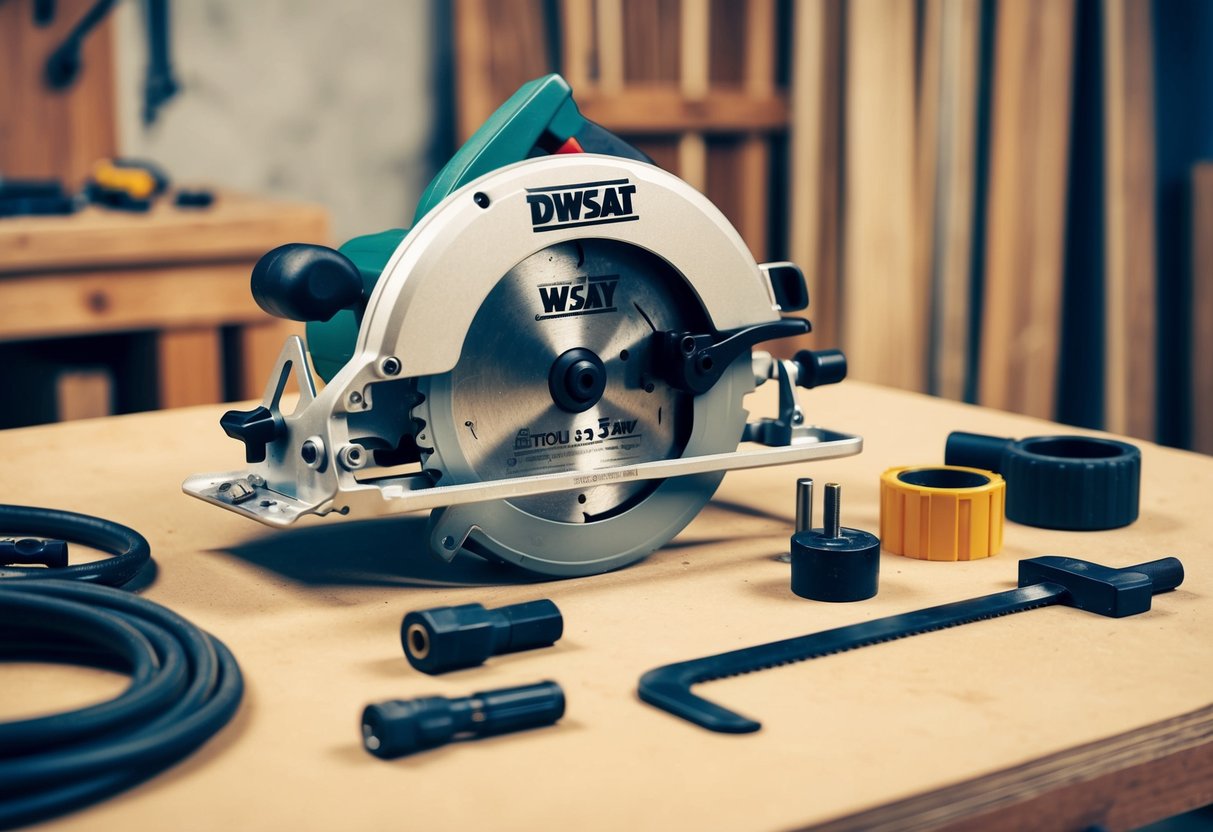
Precision attachments for circular saws can significantly improve your cutting accuracy and efficiency. These accessories enhance your saw’s capabilities, allowing you to achieve professional-quality results in your projects.
Laser Guides
Laser guides project a bright line onto your workpiece, providing a clear visual reference for your cut. These attachments typically mount to your circular saw’s shoe or blade guard. Laser guides help you maintain a straight cutting path, especially useful for long cuts or when working with intricate patterns.
Most laser guides are battery-powered and can be easily adjusted to align perfectly with your saw blade. Some models even offer dual-line lasers, allowing you to see both sides of the kerf for enhanced precision.
When using a laser guide, ensure proper alignment before starting your cut. Make test cuts on scrap material to verify accuracy. Remember that laser guides work best in low-light conditions, so consider your work environment when deciding to use one.
Rip-Cut Attachments
Rip-cut attachments transform your circular saw into a precise ripping tool. These devices typically consist of a long, straight edge that clamps to your workpiece and guides your saw. Rip-cut attachments allow you to make consistently straight cuts without the need for measuring and marking each time.
Most rip-cut attachments are adjustable, allowing you to set the desired cut width. This feature is particularly useful for cutting multiple pieces to the same dimensions. Some models can accommodate cuts up to 24 inches wide, making them ideal for breaking down large sheets of plywood or MDF.
To use a rip-cut attachment effectively, ensure it’s securely clamped to your workpiece. Keep the saw’s baseplate flush against the guide throughout the cut for best results. These attachments can significantly speed up your workflow while improving cut accuracy.
Brand-Specific Accessories

Leading power tool manufacturers offer specialized accessories designed to enhance the performance and versatility of their circular saws. These brand-specific attachments ensure optimal compatibility and functionality with your particular saw model.
Milwaukee Tool Accessories
Milwaukee Tool provides a range of circular saw accessories tailored to their power tools. Their lineup includes high-performance blades for various materials and cutting needs.
You’ll find framing, ripping, and general-purpose blades engineered for precision and durability. Milwaukee’s fine finish and ultra-fine finish blades deliver smooth, clean cuts ideal for cabinetry and trim work.
For specialized applications, Milwaukee offers fiber cement blades designed to handle tough composite materials. These accessories are built to withstand demanding job site conditions and deliver consistent results.
When selecting Milwaukee accessories for your circular saw, consider the specific requirements of your projects. Matching the right blade to your task can significantly improve cut quality and efficiency.
Maintaining Your Circular Saw for Productivity
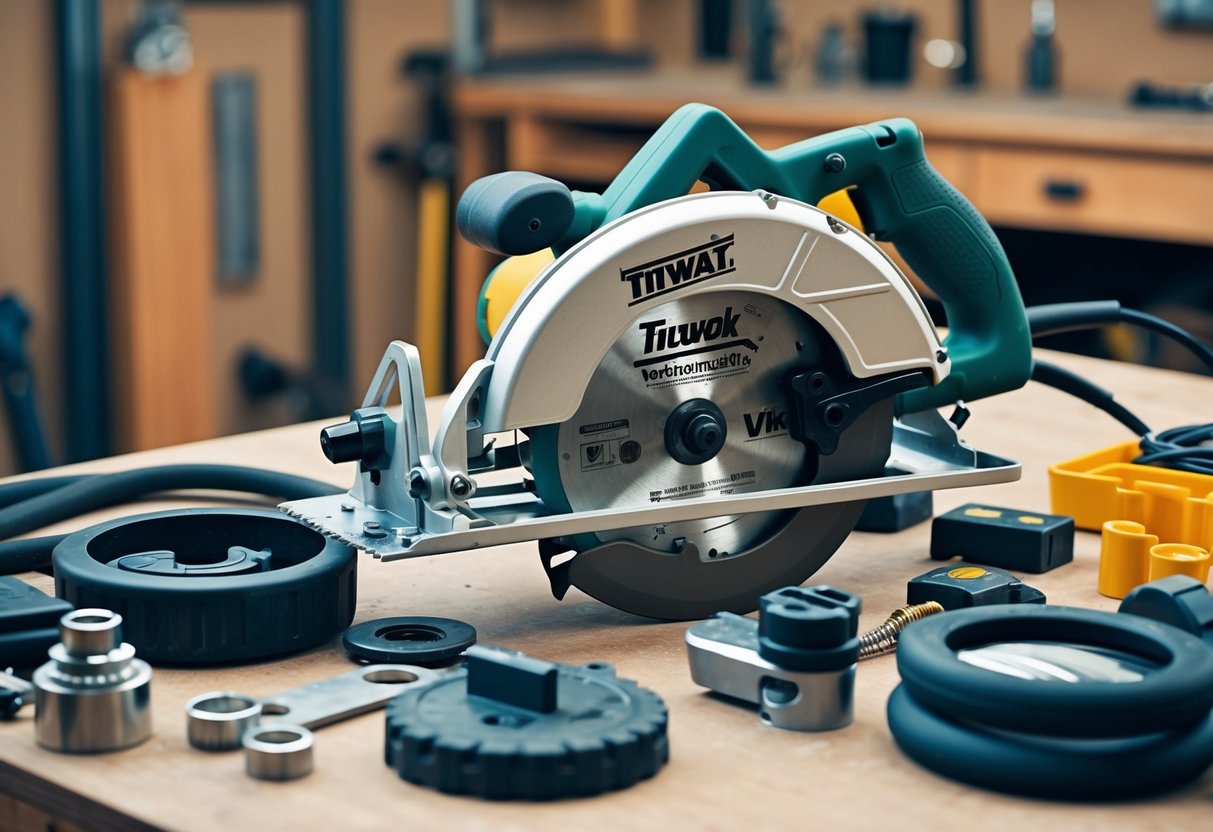
Regular maintenance of your circular saw is crucial for optimal performance and longevity. Proper care ensures clean, accurate cuts and enhances safety during use.
Blade Sharpening Tools
Keeping your circular saw blade sharp is essential for efficient cutting. You can use a file or specialized sharpening tools to maintain the blade’s edge. A diamond-coated file works well for carbide-tipped blades.
For quick touch-ups, try a handheld blade sharpener. These compact tools allow you to sharpen individual teeth without removing the blade.
Professional sharpening services are available for more extensive restoration. They use precision equipment to ensure perfectly sharpened teeth.
Remember to clean the blade before sharpening. Remove any built-up resin or pitch with a blade cleaner or solvent. This improves cutting performance and extends the life of your blade.
Protective Covers and Cases
Proper storage protects your circular saw from damage and extends its lifespan. A blade guard is crucial for safety and blade protection when the saw is not in use.
Invest in a durable carrying case for your circular saw. This protects it during transport and storage. Look for cases with padding to cushion the saw and prevent impacts.
For long-term storage, consider using a blade cover. This prevents moisture from causing rust on the blade teeth. You can find universal blade covers that fit most circular saw sizes.
Store your saw in a dry, cool area away from extreme temperatures. This prevents warping of components and protects electrical parts. Clean and lightly oil metal surfaces before extended storage to prevent corrosion.
Enhancements for Safety and Stability
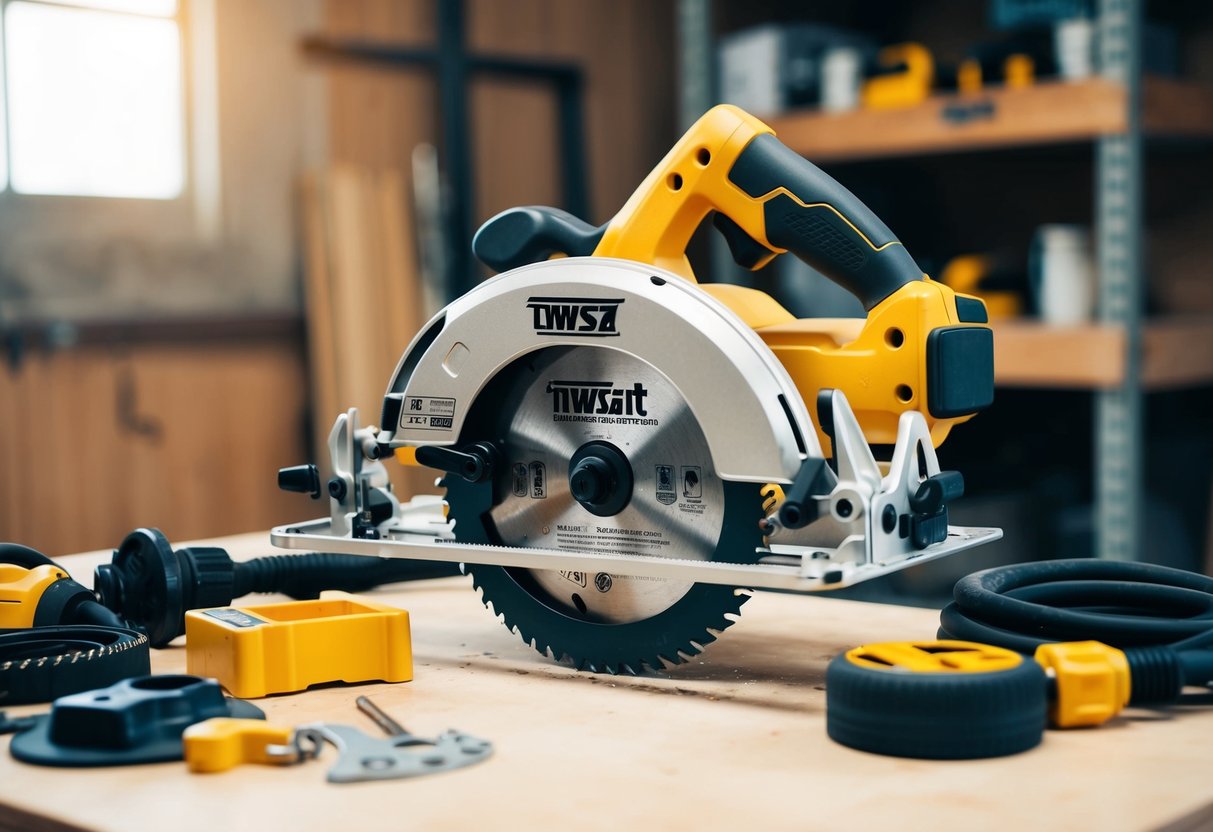
Improving safety and stability when using a circular saw is crucial for both productivity and protection. These enhancements can significantly reduce the risk of accidents and improve cutting precision.
Anti-Kickback Devices
Anti-kickback devices are essential safety accessories for circular saws. They prevent the blade from binding and the saw from jerking back towards you during operation. Most modern circular saws come with a built-in anti-kickback mechanism, but you can also add aftermarket devices for extra protection.
Look for anti-kickback pawls that grip the wood if the saw tries to move backwards. These small, spring-loaded teeth allow the saw to move forward smoothly but dig into the wood if it starts to kickback.
Another option is a riving knife, which sits behind the blade and keeps the cut open. This prevents the wood from pinching the blade and causing kickback.
Clamps and Stabilizing Accessories
Securing your workpiece and stabilizing your saw are crucial for safe, accurate cuts. Clamps designed for circular saws can hold your material firmly in place, preventing slippage during cutting.
Quick-grip clamps are popular for their ease of use and strong holding power. They allow you to secure your workpiece to a stable surface quickly.
Saw horses with built-in clamping systems provide a stable work platform and material support. They’re especially useful for cutting long boards or sheets.
Guide rail systems offer both stability and precision. They clamp to your workpiece and provide a straight edge for your saw to follow, ensuring straight, accurate cuts.
Frequently Asked Questions
Circular saw accessories can significantly enhance productivity and precision. They offer solutions for various cutting tasks and improve efficiency in woodworking projects.
What are the top circular saw attachments for improved efficiency?
Guide rails and tracks are essential for achieving straight, precise cuts. They enhance accuracy and repeatability by providing a stable path for the saw to follow.
Dust collection attachments help maintain a clean workspace. They connect to your saw and vacuum system, reducing airborne particles and improving visibility during cuts.
Laser guides and LED lights improve cutting accuracy, especially in low-light conditions. They project a line onto your workpiece, making it easier to follow your marked cutting path.
How do circular saw accessories enhance cutting precision?
Circular saw jigs and accessories significantly improve cutting precision. Edge guides and straight-edge systems ensure accurate, straight cuts.
Circle cutting attachments allow you to create perfect circles and curves with ease. These accessories transform your circular saw into a versatile tool for various cutting tasks.
Clamps and stabilizers secure your workpiece, preventing movement during cuts. This stability is crucial for achieving clean, precise results in your projects.
Which circular saw guide systems offer the best straight cuts?
Track saw systems are renowned for their ability to produce exceptionally straight cuts. They consist of a long aluminum track that guides the saw along a precise path.
Rip fences attach directly to your circular saw and are ideal for making parallel cuts. They’re particularly useful when cutting sheet goods like plywood or MDF.
Edge guides clamp onto your workpiece and provide a straight edge for your saw to follow. They’re versatile and work well for both crosscuts and rip cuts.
Are there specific circular saw attachments that professionals recommend for productivity?
Professional woodworkers often recommend dust collection systems for maintaining a clean, safe work environment. These attachments improve visibility and reduce cleanup time.
Bevel gauges are highly recommended for making accurate angled cuts. They allow you to set and maintain precise angles for various woodworking projects.
Quick-change blade systems are favored by professionals for their time-saving benefits. They allow for rapid blade swaps without the need for additional tools.
What factors should be considered when purchasing circular saw accessories?
Compatibility is crucial when selecting accessories. Ensure that the attachment fits your specific circular saw model and size.
Consider the materials you’ll be cutting most frequently. Some accessories are designed for specific materials like hardwood, metal, or plastics.
Evaluate the build quality and durability of accessories. Professional-grade attachments may cost more but often offer better performance and longevity.
Think about your typical projects and working conditions. Choose accessories that address your specific needs, such as improved dust collection or enhanced visibility.
How do I maintain and safely use circular saw attachments and accessories?
Clean your accessories regularly to prevent dust and debris buildup. This maintenance ensures smooth operation and extends the life of your attachments.
Inspect attachments before each use for any signs of wear or damage. Replace any worn or damaged parts promptly to maintain safety and performance.
Always follow the manufacturer’s instructions for installation and use of accessories. Improper use can lead to poor results or safety hazards.
Store your accessories in a clean, dry place when not in use. Proper storage prevents damage and keeps your attachments ready for your next project.


